



Most stagers think they have a pricing problem. A client pushes back on their quote, gets a second bid, and goes with someone cheaper. It happens once, then again, and before long, it starts to feel like the market is just too price-sensitive for premium rates. After awhile it can feel like you’re always competing on price and losing.
But here is what I have seen working with stagers across different markets and different stages of business: the problem almost never starts with price. It starts with not knowing what makes your staging business worth more than the one charging half your rate. And more importantly, not being able to say it clearly enough for clients to understand it.
That is a brand positioning problem. This happens when you don’t have a clearly defined signature offer or approach. And it is one of the most fixable things in your business once you understand what is actually happening.

I talk through exactly how this plays out in my recent podcast episode — including a story from my own staging business that I think will resonate. You can listen here.
What a Signature Offer Actually Is and Why Most Stagers Are Missing One
A signature offer is not a gimmick. It’s not a sales tactic. It is not a tagline.
A signature offer is the specific, defined approach that makes your staging business different from every other stager in your market. It pulls from your background, your specialty, the types of properties you work on, the experience you create for clients, and the results your work produces. When it is named and packaged clearly, it becomes the reason clients choose you over someone cheaper without needing to be convinced.
Developing a signature offer is one of the best ways to help stagers stop competing on price and start attracting premium staging clients.
Unfortunately, that rarely happens. Most stagers come out of their certification training ready to stage homes, but without this foundation. They start marketing with a logo, some photos, and a website that says something close to what every other staging website says. And because nothing clearly separates them from the competition, clients default to the only visible difference: price.
This is not a marketing execution problem. It is a brand foundation problem. You cannot create compelling messaging around value you have not yet defined.
The stagers who stop competing on price are not the ones who post more often or run better ads. They are the ones who do the foundational work of figuring out what specifically makes their approach or their business different and then build everything around that.
What This Looks Like in Practice
I have seen this shift happen across very different home staging and design businesses, and the starting point is rarely the same.
Creating a Signature Approach for a Florida Home Stager
With one of my branding clients, she came to me with a budding home staging business but no real sense of what she wanted to be known for. Her original business name did not reflect her work or her market. Through the brand development process, we identified that her specialty was luxury coastal vacant staging in Florida’s competitive market. That became the foundation of everything — a new name, Salt & Shore Staging Designs; a coastal luxury visual identity. With that established, we built messaging and positioning content specifically for her ideal clients in the high-end market.
Rhonda said it best: “I have gone from scattered and competing on price in my staging business to focused and competing on value for my ideal client.”
That shift happened because she finally knew what she was selling and to whom. You can read more about Rhonda’s full brand transformation here.

From Home Staging Brand to Lifestyle Designer
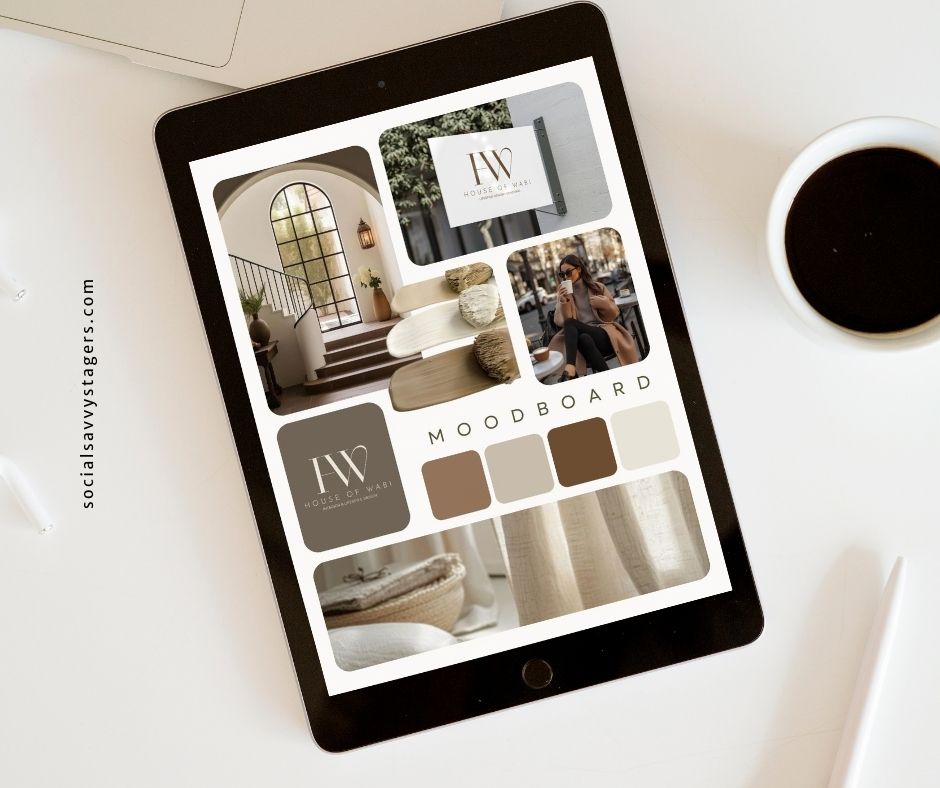
When Danielle came to me, she initially wanted to build a home staging brand, but she was unclear on what she wanted her business to be known for. It was only through our work together that she realized she didn’t want to build a home staging business at all. That her calling lay in helping busy women and families solve the root issues that were making their homes chaotic and stressful. Her approach, minimalist lifestyle design, became her signature service and approach. And her new brand, House of Wabi, became known for creating stunning spaces that helped her clients feel happier in their homes.
The brand work helped her get clear on that direction before she started marketing, not after. Instead of building a staging brand she would eventually outgrow, she built a brand that reflected where she actually wanted to go. You can read more about that process here.
Building a Luxury Home Staging Signature Approach
Helping my clients uncover their own strengths and superpowers so they can turn them into signature offers is one of my favorite parts of the brand development process. With a recent luxury home staging client, I helped her overcome her imposter syndrome by seeing that her background in managing multi-million dollar construction projects, combined with her eye for luxury design, was a huge asset that set her apart.
Through our work together, her background became the foundation of her signature white-glove approach, and it’s helped her stand out in the incredibly competitive NY real estate market. In her first year of business, my client, Dierdre, has had clients reach out specifically because of her positioning and the experience her brand conveys before they even speak to her.
You can listen to her discuss her branding experience here on a recent podcast episode.
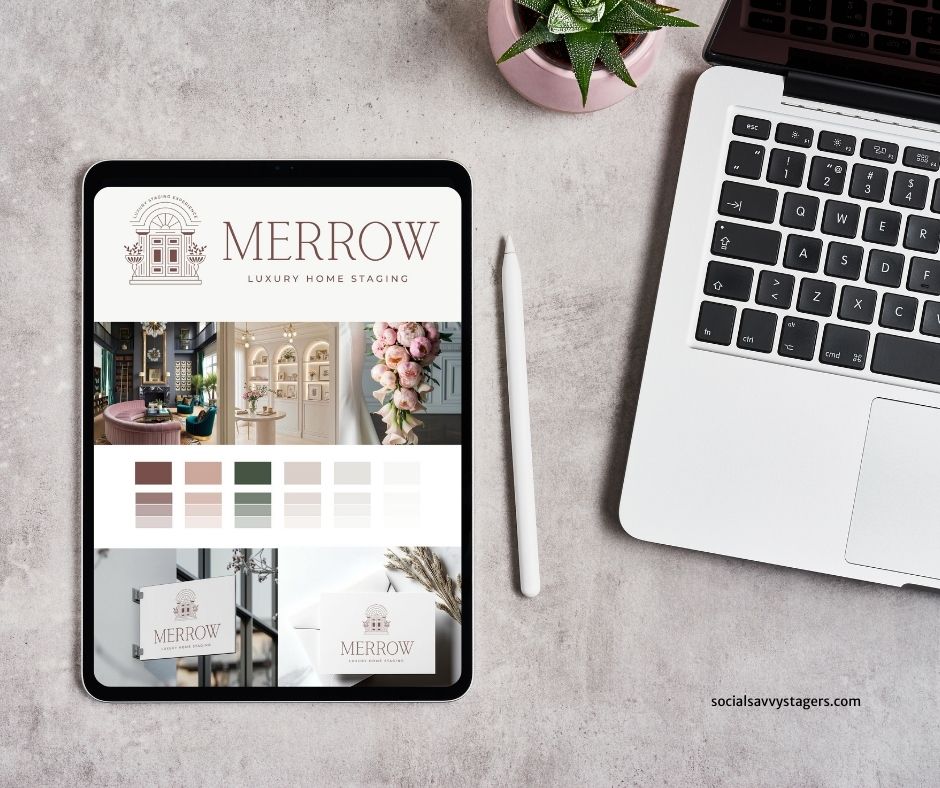
Three different businesses. Three different starting points. The same outcome: a defined position in their market that gives clients a reason to choose them that has nothing to do with price.
The Question Your Marketing Needs to Answer
If a potential client looked at your website and your social media today alongside two other stagers in your market, could they tell you specifically what makes your approach different?
Not just that your work is beautiful. Not just that you are professional and reliable. But what specifically sets you apart in a way that matters to the clients you most want to work with.
If the answer is unclear, that is where the work starts. Not in your caption strategy or your posting schedule. In understanding your own value well enough to name it and communicate it consistently. If you want to stop competing on price, this is where you start.
This is where I start with my clients, too. Before we talk about marketing strategies, content, or how to attract more clients, we need to understand what makes their business different. What do they bring to the table that their competitors don’t? What do they want to become known for? And how do we build a business and brand that reinforces that positioning?
Because until you’ve clearly defined your value, it’s difficult to communicate it in a way that gives clients a compelling reason to choose you.
If You Want Help Moving Forward
Defining what makes your staging business different takes more than coming up with a clever tagline or signature service. It requires understanding your strengths, expertise, experience, and the opportunities that exist in your market.
And when you’ve built your business around those competitive advantages, you have something far more compelling to communicate through your marketing. You’re no longer relying solely on beautiful staging photos or trying to convince prospective clients that you’re worth more than the stager down the street.
The home staging industry has traditionally taught business owners to follow a blueprint for success. Offer the same services, follow similar processes, market your business the same way, and build a staging company that looks much like everyone else’s.
But how do you build a business that stands out when you’re following the same blueprint as everyone else?
I believe every home stager needs a framework for building a successful business. But that business should be designed around YOU.
That’s why my coaching programs are built around my Business Design Framework. Instead of teaching you to build the same staging business as everyone else, I help you design one around your strengths, expertise, experience, perspective, and the opportunities in your market.
When your business is designed around your competitive advantage, you’re in a much stronger position to differentiate yourself, attract the right clients, and build a reputation that makes your business difficult to compare.
Home Staging Pricing & Positioning FAQs
Why do clients choose cheaper stagers even when my work is better?
When your marketing doesn’t clearly show what makes your approach different, price becomes the only thing left for clients to compare. It’s rarely about the quality of your work — it’s about whether your positioning gives them a reason to choose you over someone charging less.
What is a signature offer, and do I actually need one?
A signature offer is the specific, defined approach that sets your staging business apart — pulled from your background, specialty, and the results you deliver. Without one, your marketing tends to blend in with every other stager’s, which is exactly what pushes clients toward comparing on price.
Is competing on price a marketing problem or something deeper?
It’s almost always a brand foundation problem, not a marketing execution problem. No amount of posting more often or running better ads will fix it if you haven’t first defined what makes your business worth a premium rate.
How do I figure out what actually makes my staging business different?
Start by looking at your background, your specialty, the types of properties you love working on, and the experience you create for clients — then get specific about it instead of relying on generic claims like “professional” or “reliable,” which every stager already says. If you need help developing a brand identity that will truly set you apart, my brand development process will help you do just that. Learn more about that process here.
Can I raise my prices without losing clients?
Raising your prices doesn’t automatically mean losing clients, but you need to give them a compelling reason to choose your business. When your positioning clearly communicates what makes your services different and valuable, you’re better equipped to attract clients who appreciate your approach rather than those simply looking for the lowest price.
Do you help stagers with this kind of positioning work, not just their marketing?
Yes! Positioning is a foundational part of the work I do with home stagers through both my coaching programs and brand development services. We look beyond your marketing to define what makes your business different, what you want to become known for, and how to build a business and brand that reinforces that positioning.