




Building a successful and profitable home staging business isn’t easy. The long hours, the physical work, and the mental load of managing clients and projects can be a lot on their own. When you add in the pressure of figuring out how to market your business in a way that actually stands out, it’s no surprise so many stagers feel stuck or burned out. I know this because I lived it. I spent years learning how to market my work and differentiate my business from the competition. What I wish someone had told me sooner is that it wasn’t pretty photos that made the most significant difference. It was thought-leader content that changed how people understood my value, my expertise, and my brand.
The number one thing I see home stagers struggle with isn’t talent or results. It’s differentiation.
Most stagers I talk to are doing good work. Their projects photograph beautifully. Clients are happy. They’re showing up online, sharing their work, and trying to stay visible in an industry that feels more competitive every year.
And yet, despite all that effort, many continue to lose out on jobs because of price.
If you’ve ever had a potential client say they decided to go with someone else, or that another stager came in cheaper, you know how discouraging that can feel. Especially when you know the level of care, experience, and thought you bring to every project.
What makes this even more challenging is that many home stagers don’t actually understand why this keeps happening.
They assume they need to post more often, follow trends more closely, or keep doing what everyone else is doing until something clicks. So they default to what feels safe and expected. Polished before and after photos. Styled rooms. Finished spaces that look great in a feed.
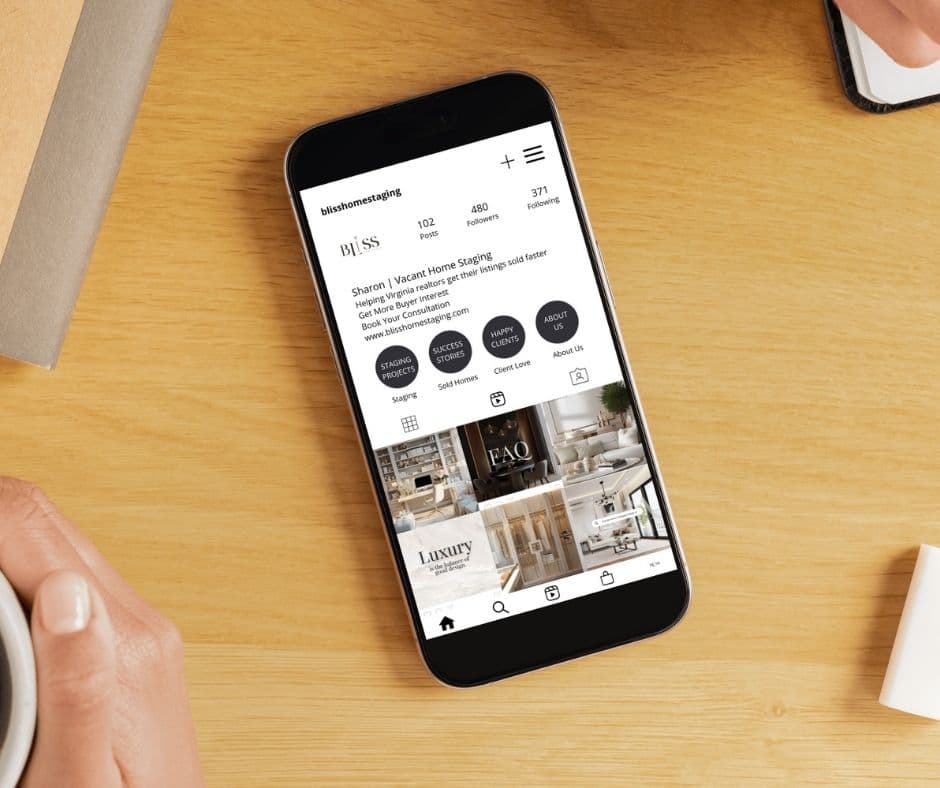
The problem is that when your marketing looks like everyone else’s, people assume your services are the same. And when those differences aren’t clear, price becomes the easiest way to compare.
Most stagers aren’t intentionally blending in. They haven’t been taught how to market their business so that it positions them as experts rather than interchangeable service providers. Add in imposter syndrome or a fear of being seen, and it makes sense why many stay stuck relying on visuals alone.
That was exactly where I found myself when I was running my home staging business.
Why Just Posting Pretty Photos Keeps You Stuck
Home staging is a visual industry, so it makes sense that most stagers rely heavily on photos and videos to market their business. Finished spaces are tangible proof of your work. They showcase the transformation and reflect your talent. And when you’re already stretched thin, posting a photo can feel like the easiest way to stay visible without overthinking things.

For a long time, I believed that if people could see my work, they would understand its value. So I shared photos. A lot of them. Styled rooms, before-and-afters, finished spaces that photographed beautifully. These posts always performed well—lots of likes and positive comments. From the outside, it looked like my marketing was working.
And in some ways, it was.
Those photos brought attention to my business. They showed that I knew how to create beautiful spaces. They helped establish that I was competent at what I did. But what they didn’t do was explain why staging mattered, how it solved real problems, or what made my approach different from the stager down the street sharing similar images.
That distinction matters more than most stagers realize.
When your marketing relies almost entirely on visuals, you’re asking your audience to fill in the gaps themselves.
You’re assuming they understand the strategy behind the work, the decisions you’re making, and the value those decisions create. Most of the time, they don’t.
This is especially true for realtors and homeowners who already feel uncertain about staging. Without context, photos are just outcomes. They don’t communicate expertise. They don’t address objections. And they don’t help someone confidently explain why your services are worth the investment.
There’s also an emotional layer to this that often goes unspoken.
Posting photos feels safe. It doesn’t require you to put your voice, perspective, or opinion out there. For stagers who struggle with imposter syndrome or a fear of being seen, just posting photos offers a way to stay present without feeling exposed. You can show your work without explaining your thinking or taking a stand.
But safety comes at a cost.
When everyone shares the same type of content, everyone starts to look the same. And when that happens, price becomes the easiest way for clients to compare options. Not because your work lacks value, but because your marketing hasn’t given them another way to decide.
This was the moment I realized that getting attention alone wasn’t enough. If people couldn’t clearly see how I was different from other stagers, price would always be the deciding factor.
Why Thought Leader Changed Everything for My Business
Once I realized that getting attention wasn’t the problem, I had to figure out what was. Visibility wasn’t the issue. Helping people understand the thought process and strategy behind the work was.
People could see my work, but they didn’t understand the thinking behind it. They didn’t understand how staging actually influenced buyer perception, pricing, or time on market. And they definitely didn’t understand why my approach was different from other stagers in my area.
So, instead of posting more photos, I started explaining my work and the decisions behind it.

At the time, home staging was a relatively new concept in my area. Realtors had questions and homeowners were skeptical. Everyone wanted proof staging worked, not just photos of pretty rooms. I was answering the same questions over and over again in consultations and conversations, and eventually, it clicked. If these questions kept coming up in real life, they probably existed long before someone ever picked up the phone to call me.
That’s when I started writing.
I launched a blog as a way to address the value of staging head-on. I wrote about real projects, common staging objections, industry statistics, and ROI. I shared success stories that showed what happened when homes were staged thoughtfully and strategically. I wasn’t trying to impress anyone, but rather to explain, educate, and provide context for people who were listing and selling homes.
At first, it felt like I was talking into the void. I remember assuming no one would read it beyond a handful of people. But over time, that blog grew into one of the most powerful marketing tools in my business. By the time I shut it down years later, it had over twenty thousand regular readers.
At around the same time, I began writing monthly articles for a local real estate magazine. Those articles took the same ideas and grounded them in local examples and data. Realtors would reference them in listing appointments. Homeowners would mention them during consultations. I started hearing things like, “I read your article and finally understood why staging matters.” or “This helped me explain staging to my clients.”
I also began sending regular email newsletters to agents I met through networking and local events. Not sales emails, but somewhat helpful and educational ones. I shared insights, success stories, and talking points they could use with their clients. Those emails didn’t just build awareness about my services. They built trust. Agents forwarded them to their clients, and they responded with questions or called to book consultations.
That’s when conversations changed.
People didn’t reach out asking what I charged. They reached out, already understanding the value of the work I did. They didn’t need convincing because they already saw me as the expert.
I go into this shift in much more detail in the first episode of The Social Stager Podcast, including what I shared, how I decided what was worth talking about, and why this approach changed the trajectory of my business.
Photos still mattered, but they were only one part of my marketing. The bulk of my marketing lay in thought-leader content that provided the context, education, and clarity that couldn’t be conveyed by visuals alone. Photos showed the outcome, but thought leader content explained the why behind the transformation.
This is a difference most stagers miss.
Pretty photos show what you do. Thought leader content shows how you think.
And when people understand how you think, they stop comparing you to everyone else.
Why Thought Leader Content is the Key to Differentiating Your Staging Business
This is where thought leader content becomes more than a marketing tactic. It becomes a positioning tool.
Most home stagers don’t struggle because they aren’t talented or because their work isn’t good enough. They struggle because, from the outside, their business looks interchangeable with everyone else’s. When potential clients scroll through social media or browse websites, all they see are beautiful photos. And, without additional context, it’s easy for them to assume that all stagers offer roughly the same thing.
When everything looks similar, price becomes the easiest comparison point.
This is why so many stagers feel stuck competing on price, even when they’re obviously talented. It’s not that clients don’t see the value in staging. It’s that they don’t understand why one stager’s approach, process, or expertise is worth more than another’s.
Thought leader content changes that.
When you consistently explain the why behind the work, you elevate yourself to the status of an expert. You give people a new way to evaluate your value based on your knowledge and expertise. You lift your staging brand out of the pack and start running in your own lane.

Instead of choosing the cheapest option, people will opt for the more experienced, knowledgeable option. The expert. And they’ll pay you more because of it.
That shift is subtle, but it’s powerful.
It’s also what adds depth to your branding. Your brand isn’t built on a logo or a color palette alone. It’s built based on what you do, how you do it, and the expertise you bring to the table. It’s built when people hear your perspective enough that it sticks, when they can recognize your voice, your approach, and your values without seeing your name attached.
This is why thought leader content works so well for stagers who want to position themselves as industry experts.
And when you do that, you don’t just build a business. You build an unforgettable staging brand.
Why This Content Feels Hard & Why Most Stagers Avoid It
If thought leader content is so effective, the obvious question is: why aren’t more stagers doing it?
In my experience, it has very little to do with a lack of skill or intelligence. Most stagers know their craft inside and out. They understand space planning, buyer psychology, the value of staging, and the ROI far more deeply than they give themselves credit for.
The real barrier is quieter.
One of the biggest issues is time. Home staging is both a physically and mentally taxing job. From juggling projects to client management to planning installs, there’s very little energy left at the end of the day. Thought leader content requires more than five spare minutes. It requires focus, reflection, and the mental space to explain your thinking. When you’re already stretched thin, it’s easy to default to the fastest option of posting a photo and moving on.

Another barrier is confidence.
Explaining your thinking publicly can make you feel vulnerable because you’re no longer hiding behind your work. You’re putting your expertise and opinions out in the open. For many stagers, especially those dealing with imposter syndrome, that feels scary. What if I say the wrong thing? What if someone disagrees? What if I’m not actually an expert?
So, instead, stagers play it safe. They post the photos. They let the videos speak for them. They avoid explaining too much or taking a clear position.
There’s also a misconception that thought leader content has to be long, academic, or perfectly polished articles or newsletters. That it requires advanced writing skills, formal training, or a massive audience to be ‘worth it.’ None of that is true. Most effective thought leader content starts with simple explanations, real examples, and honest observations drawn from everyday work.
And finally, many stagers haven’t been taught how to do this strategically.
They’ve been told to post consistently, show their work, and stay visible. Very few have been shown how to connect their expertise to their marketing in a way that feels natural and sustainable. Without a framework or system, thought leader content feels overwhelming and unclear. Which is why it keeps getting pushed to the side.
If this is you, there’s no judgment here.
This isn’t about forcing yourself to do more or suddenly becoming a content machine. It’s about having a system that supports you in sharing your expertise without overthinking every post.
This is exactly why I created The Social Stager Club. So stagers aren’t left guessing what to say or how to turn their knowledge into meaningful content. The content plans inside the Club are designed to help you confidently create thought-leader content as part of a complete marketing system, not in isolation or on the fly.
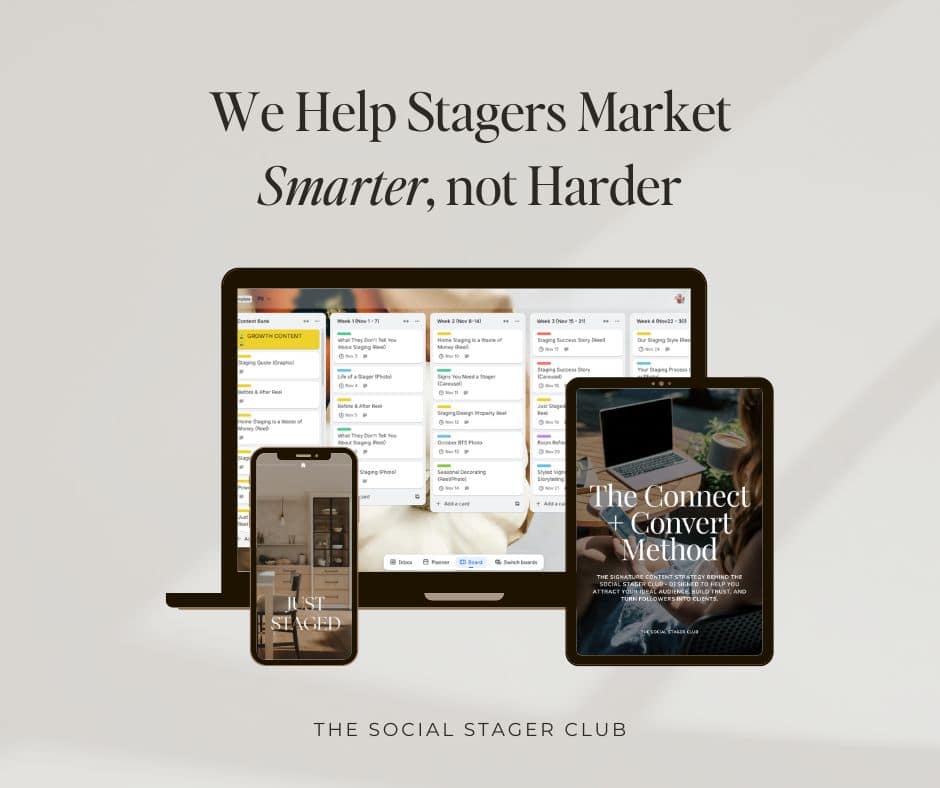
When thought leader content has a clear place in your marketing, it stops feeling overwhelming. It becomes a tool for clarity, confidence, and differentiation.
And that’s when your marketing starts working for you instead of feeling like one more thing on your to-do list.
What This Shift Changed for My Business
Looking back, the biggest shift in my business didn’t come from learning new marketing tactics or jumping on the latest platform. It came from creating content that positioned me as a thought leader.
When I stopped sharing only photos and started creating content designed to help, educate, and inform my target audience, everything changed. Thought leader content answered the why behind the transformations and helped people see me as the expert, not just another stager.
Once I created a marketing system built around sharing different types of content, marketing my business became easier. Demand for my services and expertise increased. I stopped having to convince people to invest in staging or explain the value of what I did. Pricing stopped being the focal point of every decision.
This is the perspective I wanted to share in the very first episode of The Social Stager Podcast.
In that episode, I talk more openly about the marketing truths I learned while building my staging business, including what worked, what didn’t, and what I wish someone had told me earlier. If this article resonated with you, the podcast episode will give you even more context, nuance, and real-world examples.
You can listen to the episode wherever you get your podcasts, and I’d love for you to follow along as we continue these conversations around marketing, branding, and clarity for home stagers.
Because you deserve to know how to position yourself as the staging expert you are and build a brand that truly stands out in your market.
Go Deeper on The Social Stager Podcast